Building a home involves a sequence of connected decisions and milestones. While every project is different, understanding the broad stages can help you prepare for conversations, approvals, and construction activity.
1. Early planning
The process usually begins by clarifying goals, space needs, budget considerations, and the characteristics of the property. This early work creates a foundation for design and helps identify questions that need to be resolved before construction begins.
2. Design and documentation
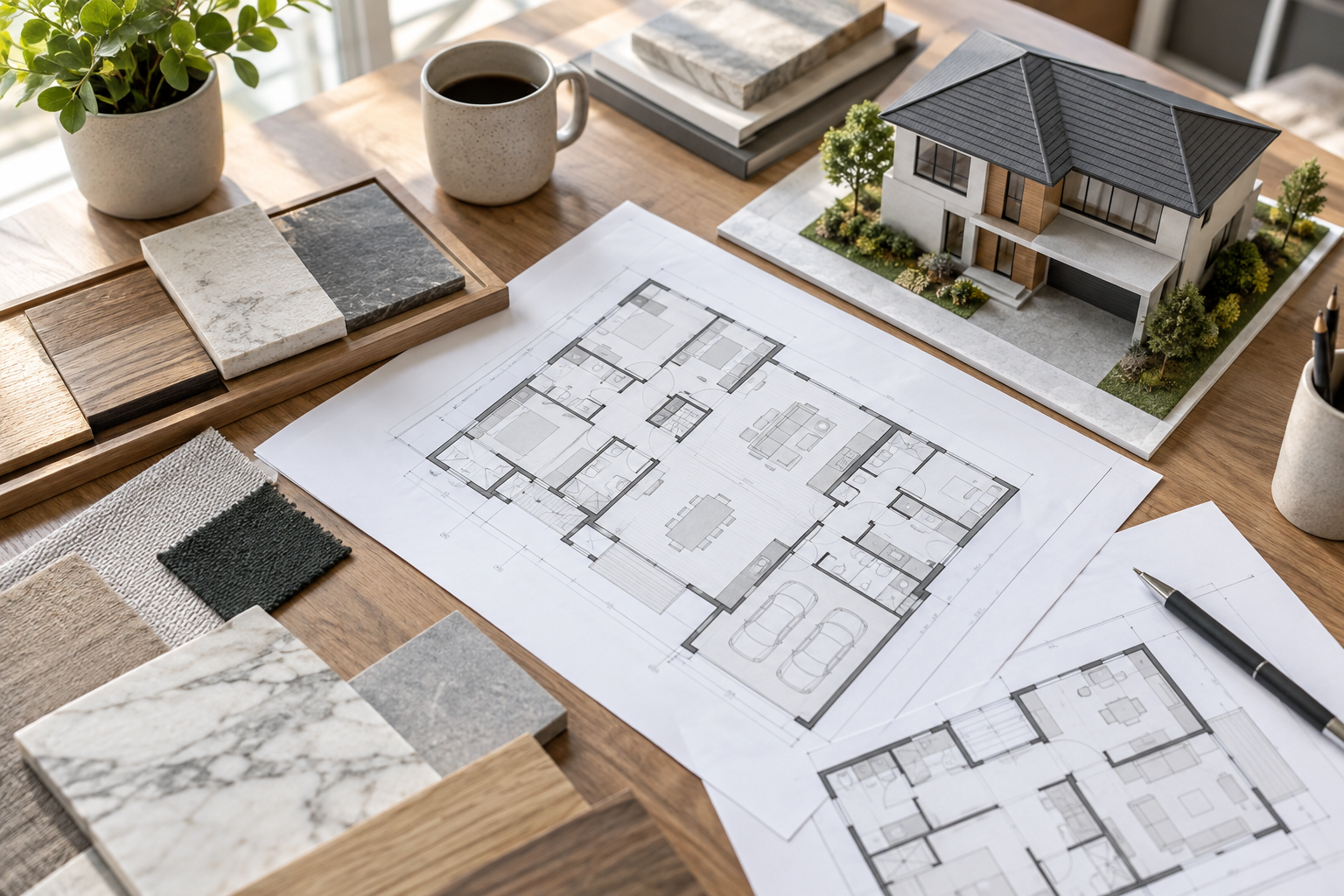
Plans are developed and refined to describe the home, its spaces, and the work required. Materials, systems, and details are considered as the design takes shape. Requirements and approvals vary by municipality, so confirm the process that applies to your project with qualified local professionals.
3. Pre-construction preparation
Before work begins, the site, schedule, materials, and project coordination need to be organized. Clear documentation and timely decisions can help reduce uncertainty once construction is underway.
4. Construction
Construction commonly progresses through site work, foundation, framing, exterior enclosure, building systems, insulation, interior finishes, and final details. Some activities overlap, while others must happen in sequence. Conditions, material availability, and approvals can affect timing.
5. Review and completion
Near the end of the project, remaining items are reviewed and completed. Documentation, care information, and any required final steps should be discussed with the project team.
Staying informed does not require managing every detail yourself. It means asking questions, keeping decisions organized, and understanding what comes next.